


Myopia is an optical disorder in which incoming light focuses in front of the retina. Several types of myopia exist, including pathologic myopia, which is characterized by severe refractive error and linked with degenerative changes in ocular structures. High myopia typically results from an abnormal increase in axial length. Serious complications, such as retinal detachment and glaucoma, are common and may lead to permanent vision loss.
The overall well-being of your child, including ocular health, is of utmost importance. If you observe your child experiencing difficulty seeing distant objects or frequently squinting, these behaviours may indicate a vision impairment. Such challenges can hinder concentration in academic settings and negatively affect school performance. Early intervention for myopia, a condition characterized by near-sightedness, is crucial, as untreated myopia can result in progressive vision complications.
Age is a significant determinant in the prevalence of myopia. The incidence of myopia increases over the school-age years. Studies indicate that the earlier onset of myopia is associated with a greater degree of myopia by the end of childhood, although individual variability is observed. The term myopia progression refers to the increase in myopia following its onset during childhood.
If a child is myopic at ages 5 to 6 years, the myopia is sure to remain and will probably increase.
Children with myopia frequently experience increased near-sightedness as they grow, particularly between ages 7 and 12, a period characterized by rapid ocular growth. Myopia progression typically continues throughout adolescence and may persist into the early twenties before stabilizing.
Several factors may influence the development and progression of myopia, including the following:
The primary objective is to ensure clear, comfortable, and efficient vision. In the management of paediatric myopia, the aim is to halt or slow the progression of myopia, a process known as myopia control.
Multiple interventions with a minimum of two years of follow-up and supporting scientific evidence are available for myopia control. These include defocus lenses, contact lenses, low-dose atropine eye drops, orthokeratology, low-level red-light therapy, and combination therapies.
Establishing healthy visual habits is essential. Parental involvement is critical in ensuring adherence to prescribed treatments, thereby supporting therapeutic progress and preventing further deterioration.
Myopia control treatments have primarily been studied in children aged approximately 6 to 16 years. There is limited evidence regarding the effectiveness of these interventions in younger children, older adolescents, and young adults.
Short-term benefits of myopia control include improved vision and enhanced quality of life. Stable vision enables children and adolescents to perform better in academic settings and daily activities.
Long-term benefits of myopia control involve a reduced risk of vision impairment and associated ocular health complications throughout an individual's lifetime.
Ultimately, myopia control aims to safeguard long-term ocular health.
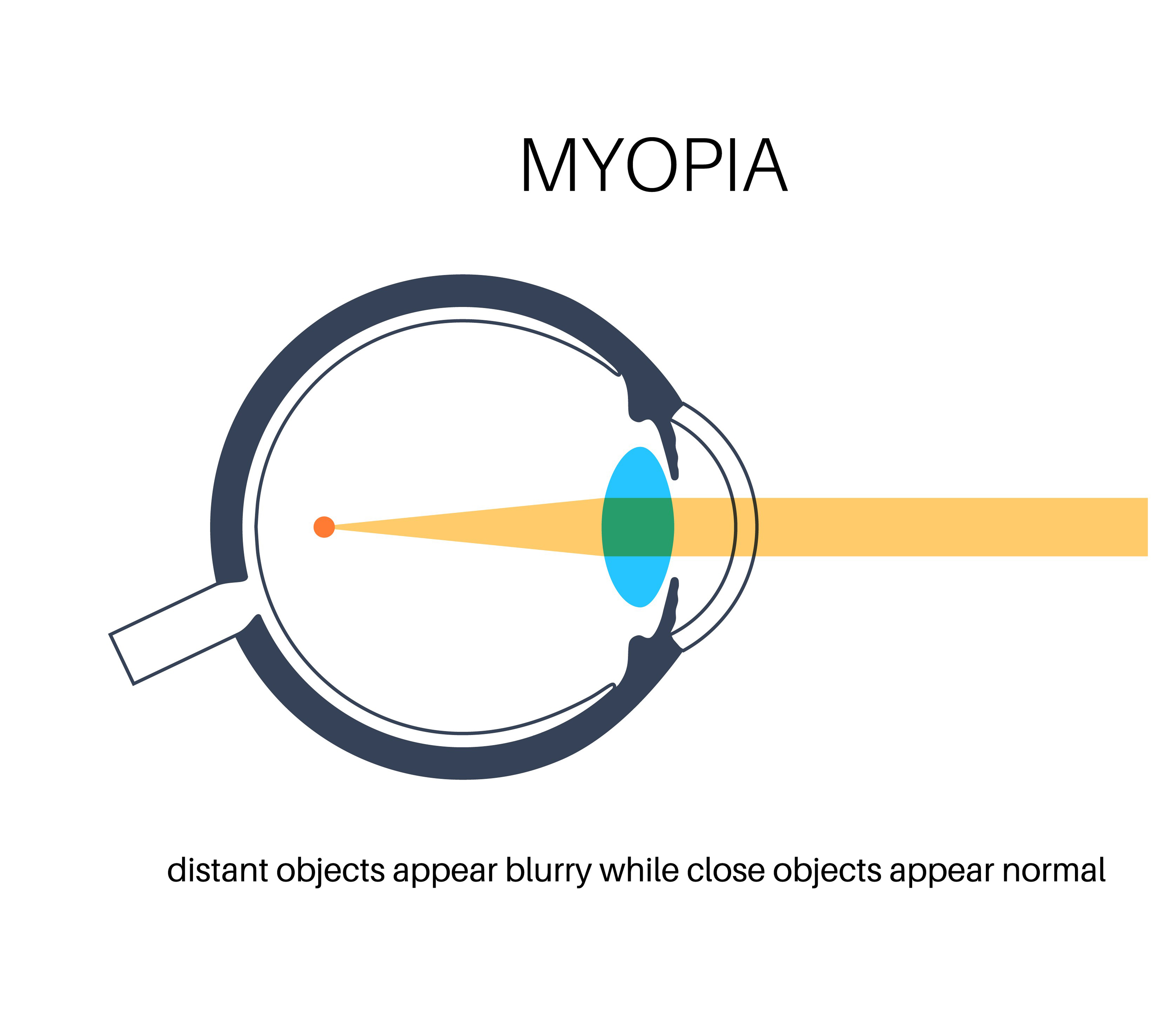
Myopia is an ocular condition that elevates the risk of vision impairment and various eye diseases. It extends beyond the need for corrective lenses and cannot be fully addressed with laser surgery. Once the eye elongates, this structural change is irreversible, resulting in a persistent risk to ocular health.
Myopia is a lifelong condition that increases the likelihood of developing sight-threatening complications later in life. Consequently, the World Health Organization (WHO) has classified myopia as a global health concern.
A typical eye length ranges from 22 to 24 mm. When axial length exceeds 26 mm, the lifetime risk of vision impairment in children rises to a lifelong risk of vision impairment. In cases where the eye grows beyond 30 mm, characteristic of very high myopia, the risk increases to 90 percent.
Even at lower levels of myopia, individuals face an elevated risk of developing eye diseases compared to those without myopia.
Accredited MiYOSMART / MiSight Practice
At The Eye Care Centre we provide advanced specialized professional services in the management and monitoring of myopia. Key services include the following:
A visit to the myopia control clinic is recommended under the following circumstances:
An Innovative Approach to Myopia Management
MiYOSMART lenses represent an advanced technology designed for myopia control. In addition to correcting myopic refractive error, a two-year clinical trial indicates that these lenses can reduce myopia progression by 60%.
Advantages of MiYOSMART Lenses

© 2026 Eye Care Centre Johannesburg. Website designed by Personalised Promotions in association with SA Medical Specialists. Sitemap.


FORMS
Request for access to records form | Outcome of request and of fees payable form
DISCLAIMERS